Saturday, August 15, 2020

Mahoney Refrigerator Line #808

I'm going to stray from R Street this time and talk about a modeling project in memory of a friend. 

A few of the members of the Sacramento Modular Railroaders came up with the idea to decorate a small number of reefer cars as a tribute to one of our departed members: the late, great Dan Mahoney (1942-2018). A set of custom ink jet decals were made for the project by Jim Collins featuring a ‘Mahoney’s Baloney’ meat reefer refrigeration line logo and reporting marks. As fun as the decals are, I ended up not using them. I wanted to go in a different direction. In my mind, the refrigerator car I built is part of a general purpose Mahoney Refrigerator Line company that hauls all sorts of things that need refrigeration during transport. Plus I built a non-meat reefer kit, so I needed a different back story. 

For the project, I built a Tichy PFE R-40-4 wood reefer kit (kit 4024) and decorated it with elements of Microscale Decal number 87-890 ‘Merchants Despatch Transportation Co. (MDT) Early Ice Reefers, NYC, GM&O, Lackawanna, Others’. I also used Microscale’s ‘Railroad Roman’ letter set to piece together the ‘MAHONEY’ part of the decoration.

I augmented the kit with some wire corner grab irons and some photo etched ice hatch brackets. I’m not sure where I picked up the photo etched parts; I’ve had them in my stash for years.  That I was able to quickly find my photo etched brackets is maybe the biggest organizational miracle in my entire model railroading career.

Model Assembly:

The kit was a fun build even though I had to overcome some significant part warpage in the floor, roof, and side parts. With a bit of coaxing, cursing, and lots of rubber bands, I persuaded the assemblage into a reefer shaped object that I was pleased with.  

Painting:

The Tichy kit comes undecorated. For colors, I decided on reefer white on the sides and boxcar red on the car ends and the roof. I used Acrylicos Vallejo (AV) paints from both their regular line and their airbrush paints line.  I mixed a few colors for boxcar red. I don’t recall of all the colors I used, but the base was AV’s ‘German Red-Brown’. ‘Reefer’ white was just AV’s ‘White’ from their airbrush line of paints with a few drops of their ‘Sky Grey’ from their regular line. 

Decaling:

It’s been a very long time since I’ve I decaled anything. Thankfully, the process was easier and more rewarding than I remembered. Marshalling all the car side decals together, I staged them on the model and on a car drawing that came with the decal set. It all felt a bit ‘ransom note-ish’, but it helped me organize the placement. Sometimes during the actual decal placement, it was a little like herding temperamental, floating cats that didn’t want to get in line. The very small, white end reporting marks are made up of 5 different decals to make ‘M.R.X. 808’. So, for instance, I’d get the ‘X’ down and the ‘M’ would wander out of position. I found I had to be in a particularly patient mood to do this kind of work, but if I was in the right frame of mind, things came together quite nicely. I used a gloss coat on the car followed by a localized application of Microscale’s ‘Micro Set’ before getting the decals into place and their ‘Micro Sol’ to help everything snuggle down. A couple of coats of Tamiya clear flat from a rattle can further blended the decals into the model.


Tiny, Subtle Tributes:

I numbered the car ‘808’ in reference to August 2008 when Dan joined our club. The last bit of tribute to Dan is also the smallest. A car’s accurate weight markings are crucial for fair freight charges and cars were routinely re-weighed. The new weights would be painted in the car’s weight info on the side of the car and the location (a station code) and date would also be indicated. I decaled the re-weigh patch to include a New England re-weigh station code (‘R’ for Rutland, Vermont – Dan’s home state) and month/date reweigh date to signify his date of birth. These re-weigh decals came from a Sunshine Models PFE reweigh decal set.  The ‘R’ is from the ‘ROS’ for Roseville reweigh station decal. The ‘9’ and ‘-42’ are from different areas of the sheet.

Regrets, I Have a Few:  

There were are a few ‘learning moments’ with this project. Thankfully you can only see one car side at a time, and so you may not notice that the car numbers line up with the reporting marks on one side the other it’s closer to centered underneath the reporting marks on the other. The car weight stenciling is nearer the bottom sill on one side and a bit higher up on the other.  And finally the KC brake cylinder is in the wrong spot.  This is extra frustrating to me as I had it in the right spot at first and talked myself out of it and moved it to a different, and wrong, location. I blame the not-so-clear part locating diagram in the kit instructions. There is also some overspray from the car bottom that hit one of the sides. This, I’m telling myself, is just ‘extra weathering’. 


Here’s to Dan:

I don’t know what Dan would think of us building tribute cars in his memory. I know he knew we were planning on it, and he got a chuckle out of Mahoney’s Baloney idea. I can’t help but think his New Englander upbringing which, I assume, contributed to that reserved and understated nature of his, would be hesitant to have anything be a ‘tribute’ to him.  But tributes like these are useful for the living as we continue to mourn the loss of our friend. I know for certain he’d like that it got me to the modeling bench. Not only that, I was able to actually finish a project which is a real rarity for me. Here’s to you Dan. I miss you, buddy.    

Monday, February 8, 2016

Ops on R Street (Circa 1958)

The City of Sacramento commissioned a number of traffic studies through the years, and for a railroad history enthusiast they can be an information boon. For example, there was a 1958 era study that sent researchers out to ride with all the engine crews that performed switching operations in the city.

Below is what I've distilled from that study for the crews that worked the R Street area for the different railroads at different times of the day. It's an interesting record and the study describes a lot more rail activity than I would have guessed.

I've created some graphics that I've used in the last couple of PowerPoint presentations I've given on R Street (most recently at the Bay Area Layout Design & Operations Weekend series of clinics held at California Railroad Museum on January 30th), that simplify the tracks and city streets down to something like a board game map. It's tough to get into the fine details about each switch job in the city during a Powerpoint as it's pretty dry stuff for most folks not intimately interested in R Street rail history (and even then...). But here on the blog, you can safely fall asleep and come back later for more :-).  After each graphic I'll list out the information given for each "Engine Assignment" as given in the traffic study. It was a lot of typing, so if anything looks off, feel free to drop me a line, or leave a comment, so I can check the original copy.

All jobs below were handled by yard crews, and for each rail company the tracks on R Street (and much of the city) were under Yard Limits rules. That is they were operating under a specific rule given in all railroad rule books.(I'm assuming... certainly every rule book I've seen.)  Under this rule crews only had to protect against 1st class trains (non existent on R Street itself, after maybe 1927, but the WP mainline cutting through town would have had 1st class trains the WP and SN crews would have had to worry about, as well as any SP crew crossing the WP main on R Street between 19th and 20th Streets). The other element to the yard limits rule is Restricted Speed. Specifically crews had to keep their speeds down so that they would be able to stop at half the distance to the range of vision - but under no circumstance could they go more than 20 mph.

The engine assignment numbers in the listings from this study I think were internal company job designations and didn't relate to specific locomotives.

I'm going to present the jobs in order of time of day, starting at midnight. This is a little different than how the traffic study presented them, so you'll see some 'follows the previous assignment's route' verbiage in the first set of jobs that ran between midnight to 8:00 am.

I've included the Sacramento Northern jobs that were in the area mostly for color. They didn't have any specific duties on R Street itself, but during this era they would have had trackage rights on the WP parts of R Street (and the Q/R Alley) and could have conceivably been seen making their way from one part of town to the other via R.

Central California Traction had no yard forces in town and all switching in town by them was by road crews. As far as I can tell there was no Central California Traction presence on R Street with the exception of their name on the WP freight house at 3rd and R.

We'll start with an area map circa 1927, not from the study, that shows the interchange points  mentioned in the study- I've noted in Red the reporting points or yards mentioned in the study. I have to admit I'm guessing on the location of the SN yard in West Sacramento (West Side Yard). Everything off of R Street and certainly once you cross the river quickly turns into the 'Here be Dragons' notations on the railroad maps in my mind. (The password is 'myopic')


SN Engine Assignment No. 141
Time Shift 12:00 P.M. to 8:00 A.M. (daily)
Reporting Point - Varies: West Side Yard; 2d and M Streets; or 17th and D Streets.

Duties- Usually leaves reporting point a few minutes after 12:00 P.M. and ties up between 7:30 A.M. and 9:00 AM at the nearest reporting point. Switches the entire system from West Side Yard to Haggin Yard and X Street from the Central California Traction Company - Southern Pacific interchange to The Western Pacific interchange at 19th and X Streets. Generally switches to and from eight different spurs and sidings, moving 75 cars, including 24 cars to and from the above-named interchanges. Crosses the Sacramento River between two and four times each shift.

SP Engine Assignment No. 636
Time Shift 12:00 P.M to 8:00 A.M. (daily)
Report Point- Generally in the area of Brighton Junction where the preceding shift has tied up.

Duties - Ordinarily begins work a few minutes after 12:00 P.M. and arrives at main yard between 4:30 A.M and 5:30 A.M. The preceding crew is usually able to complete only the switching assignments in the outbound direction. This assignment covers the same area, but in the opposite direction. Brighton Junction to the main yard via R Street. Generally moves about 70 cars to and from 12 spurs and sidings, including an average of 20 cars to and from The Western Pacific Railroad interchange at 4th and R Streets.

SP Engine Assignment No. 641
Time Shift- 12:00 P.M. to 8:00 AM (daily)
Reporting Point- Southern Pacific Main Yard

Duties- Generally leaves the yard about 2:00 A.M., following about two hours of switching. Returns about 5:45 A.M. with from 15 to 20 cars, completing the shift in the yard. Switches the lower end of R Street, along the Sacramento River Levee to the various oil plants, and the industrial area located south of Y Street (Broadway) between Front and 5th Streets. During these operations, switches the Sacramento Northern-Central California Traction interchange on X Street and The Western Pacific Railroad interchange on R Street. Usually switches about 14 spurs and sidings and moves an average of 50 cars, including 25 cars to and from the interchanges.

WP Engine Assignment No. 32
Time Shift- 12:00 P.M. to 8:00 A.M (daily)
Reporting Point- Western Pacific Main Yard

Duties- Follows the pattern of Assignments Nos. 13 and 22, except that there is generally less switching time in the yard. Usually moves about 60 cars to and from 15 spurs and sidings, including an average of 35 cars to and from the four interchanges.
SN Engine Assignment No. 31
Time Shift- 8:00 A.M. to 4:00 PM (daily)
Reporting Point - Varies: West Side Yard; 2d and M Streets: or 17th and D Streets.

Duties- Generally leaves reporting point between 8:30 A.M. and 9:30 A.M returning to one of the three points about 4:00 P.M. Switches all spurs and sidings on Front Street, X Street, from Front Street to 19th Street, Libby-McNeil and Libby on Alhambra Avenue, the Haggin Yard, the West Side Yard, and all interchange tracks. Makes an occasional trip to Woodland. Usually moves about 70 cars each day to and from 10 to 15 spurs and sidings, including and average of 14 cars to and from the following interchange tracks: The Western Pacific Railroad at Frong Street between P and Q Streets; Southern Pacific-Central California Traction at Front and X Streets; and The Western Pacific-Central California Traction at 19th and X Streets. Crosses the Sacramento River from two to four times each shift.

SN Engine Assignment No. 32
Time Shift- 8:00 A.M. to 4:00 P.M. (daily)
Reporting Point -Same as Assignment No. 31

Duties- Same as Assignment No. 31 but in opposite direction. Generally starts switching about 8:30 A.M. and ties up about 4:00 P.M. Generally moves about 70 cars to and from an average of 10 spurs and sidings, including an average of 15 cars to and from those interchanges: The Western Pacific Railroad at Front Street between P and Q Streets; Southern Pacific-Central California Traction at Front and X Steets; and The Western Pacific-Central California Traction at 19th and X Streets. Crosses the Sacramento River between three and four times during each shift.

SP Engine Assignment - No Number (***)
Time Shift - 8:00 A.M. to 4:00 P.M. (daily)
Reporting Point - Southern Pacific Main Yard

Duties- Usually works in the yard for about one hour before leaving. Leaves with from 10 to 20 cars to switch industrial tracks on Front Street, the lower end of R Street, and along the levee to the industrial area south of Y Street (Broadway) between Front and 5th Streets. Switches The Western Pacific Railroad interchange at R and 4th Streets and Sacramento Northern-Central California Traction interchange at Front and X Streets, moving about 36 cars to and from the interchange. Returns to the yard about mid-shift to deliver and pick up, and completes the shift about 3:50 P.M, returning to the yard with from 12 to 20 cars. The switching movements ordinarily require the moving of about 70 cars to and from 17 spurs and sidings, including the interchange movements.

SP Engine Assignment No. 635
Time Shift 8:00 A.M. to 4:00 P.M. (daily)
Reporting Point- Southern Pacific Main Yard

Duties- Leaves the yard between 8:00 A.M. and 10:30 A.M., depending upon the amount of work in the yard, and returns between 3:00 P.M. and 4:00 P.M. Generally leaves with about 10 cars. Switches the industrial tracks along R Street from Front Street to Brighton Junction. Occasionally switches the line along the Sacramento River Levee. On the days when this is done this assignment also switches  the Sacramento Northern-Central California Traction interchange at Front and X Streets and the The Western Pacific interchange on R Street between 4th and 7th Streets. The switching ordinarily involves the moving of about 53 cars to and from an average of 11 different spurs and sidings, including an interchange movement of about 30 cars.

WP Engine Assignment No. 13
Time Shift - 8:00 A.M. to 4:00 P.M (daily)
Reporting Point- Western Pacific Main Yard

Duties- Generally leaves yard about 9:00 A.M. with 15 cars and returns about 3:30 P.M. with an equal number. Switches all industries north and south along 19th Street. and west along R Street to Front Street, including Sacramento Northern transfer tracks (receiving only) at Front Street, Southern Pacific interchange tracks at R and 4th Streets, Sacramento Northern-Central California Traction interchange tracks at 19th and X Streets, and the Sacramento Northern interchange at Haggin Yard. Returns to the yard twice during the shift to deliver and pick up. Ordinarily switches about 65 cars to and from 11 spurs and sidings, including an average of 15 cars to and from the four interchanges.

SN Engine Assignment - No. 143
Time Shift- 4:00 P.M. to 12:00 P.M (daily
Reporting Point- Varies: West Side Yard or 2d and M Streets.

Duties- Switches the entire system. Generally leaves the reporting point about 4:15 P.M. and ties up at one of the two reporting points between 11:30 P.M. and 12:00 PM. Usually switches to and from 12 spurs and sidings, moving about 60 cars, including 10 cars to and from the interchanges with The Western Pacific Railroad at Front and P Streets, the Southern Pacific-Central California Traction at Front and X Streets, and The Western Pacific-Central California Traction at 19th and X Streets. Crosses the Sacramento River between two and four times each shift.

SN Engine Assignment -No. 144
Time Shift- 4:00 P.M. to 12:00 P.M. (daily)
Reporting Point - Varies: West Side Yard; or 2d and M Streets.

Duties- Generally switches in yard for about one hour before starting to switch industrial tracks. Switches industries on est side of river and makes a daily trip to Woodland. Ordinarily switches only along Front Street to X Street, on the east side of  the river, including the interchanges with The Western Pacific at Front and P Street, and with Southern Pacific and Central California Traction at Front and X Streets. The switching is usually to and from four different spurs and sidings, moving about 25 cars, including an average of 15 cars to and from the above-named interchanges. Generally crosses the Sacramento River twice during each shift, but three or four times if starting from or tying up at 2d and M Streets yard.

SP Engine Assignment- No. 633
Time Shift- 4:00 P.M. to 12:00 P.M. (daily)
Reporting Point - Southern Pacific Main Yard

Duties - Generally works in yard on switching assignments for from two to four hours and leaves yard with an average of four cars; switches industries along Front Street to R Street, along R Street. Front to 5th Streets, and along the Sacramento River Levee, south, to the Standard Oil Company's plant on Y street (Broadway). Serves the Sacramento Northern-Central California Traction Interchange at Front and X Streets and The Western Pacific Railroad interchange at Front and X Streets and the The Western Pacific Railroad interchange at R and 4th Streets. The interchange movements average about 26 cars per day for this shift, and the switching movements require the moving of an average of 40 cars to and from 11 different spurs and sidings. It is the usual practice for the crew to return to the yard once during the shift to deliver and pick up. The work away from the yard is usually completed by 9:30 P.M and the shift is completed by switching in the main yard.

SP Engine Assignment - No. 636
Time Shift- 4:00 P.M. to 12:00 P.M. (daily)
Report Point - Southern Pacific Main Yard.

Duties - Leaves the yard about 5:30 P.M. with from 10 to 20 cars and generally ties up in the vicinity of Brighton Junction at the completion of the shift. Switches the industrial tracks along R Street. Occasionally switches The Western Pacific Railroad interchange at R and 4th Streets. The switching along R Street usually requires the moving of about 50 cars to and from an average of 14 different spurs and sidings.

WP Engine Assignment - No. 22
Time Shift - 4:00 P.M. to 12:00 P.M. (daily)
Reporting Point - Western Pacific Main Yard

Duties - Generally works in yard for about one hour before starting to switch industrial tracks along The Western Pacific main line, west along R Street, and 19th Street to Front Street. Also works all interchange tracks. Follows the pattern of Assignment No. 13. Usually switches between 60 and 70 cars to and from 11 spurs and sidings, including an average of 28 cars to and from the four interchanges.

Monday, July 21, 2014

Shelf Rot

It's only been 18 months since my last update about/or any work done on the WP 3rd street freight house model. On a geologic time scale, I'm blazing along with blinding speed!

The time spent on the shelf of my cluttered office/man-cave/workshop has taken its toll on the model though. Specifically the delicate handrails on the stairs and deck that lead to the office doors. One wouldn't have needed to be Nostradamus (1503-1566) to predict that any such wear and tear would have worn and torn in that particular area. And since this model is intended for a module (a drop-in module at that) the decision to fabricate the handrails in ultra small diameter plastic rod was probably pure folly from the start.

So I've broken my R Street modeling fast by attending to rebuilding the handrails, this time in brass. My soldering skills are merely at the neophyte level, so it took me longer then most modelers to fiddle, tack and solder all the brass together and then bend it where needed and then clip and file away the excess solder till it looked half way decent. Still, it was a fun Sunday evening project to while away the hours until the final episode of the second season Endeavor came on Masterpiece.

I'm hoping it whetted my appetite for more modeling soon. And we can hope this will be 'soon' measured on more of a Julian calendar, something that measures mere weeks rather than epochs and eons.
It's a sad state of affairs... the plastic rod, it's not so strong. 
 
Laying things out. 


Tacked down and ready for solder... 


But maybe not _that_ much solder... 
Eventually it cleaned up somewhat. 

Monday, February 10, 2014

Thomson-Diggs Billhead

A few months ago, I purchased an eBay offering of a Thomson Diggs bill-head from 1924; they seem to crop up fairly regularly. The bill-head includes an illustration of the original portion of the Thomson Diggs building on R Street. The current building is much bigger than this early nucleus. It later included a first floor expansion on the West side (to the right of the building in the illustration) and then later still additional floors were added on top of that expansion. This illustration was one Thomson Diggs used in their 1920s catalogs that I've seen down at the Center for Sacramento History. Also of note is warehouse to the left of the main building. I think either this is an earlier and smaller version of the warehouse that I've seen later pictures of, or the picture is keeping this corrugated warehouse shorter than it was in reality. Perhaps this was done on purpose to not block the view of the main building.

Sunday, January 13, 2013

Freight House: the handrails

Hello, everyone. Just a quick build update as I did manage to deal with the handrails on the freight house model over the weekend.

I certainly don't hold myself out to be a master modeler (and I'm sure you're seeing a multitude of sins in these very close up shots... click the picture to get really close in), but I rather like the way the handrails turned out. I built them up out of .025" Plastruct rod. For your amusement, I've included a number of in progress pictures.


I think I'll install those window A/C units next.

Wednesday, January 9, 2013

Freight Office Model Update

I may have mentioned somewhere that I am a really, really slow modeler. Even after I take into consideration the non-modeling demands on my time, I can only come to the conclusion that my progress on any given modeling project has to be measured on a geologic time scale.

Over the holidays I did manage to put in a few, ok, several hours on the freight office- and I'm still not done with the one wall I've been working on. So here is a picture in the midst of the sausage making .
My plan is to put as many of the details (including paint) while I can still work on the individual walls as separate pieces as  possible - I have other walls cut out and most of the windows installed by the way but I'm still a  long ways from assembling them together.

That said, I did get the foundation piece under the wall (not trimmed completely yet) and I've extended off to the left where the electrical conduit starts. 

The little bits attached to the walkway are the beginnings of  handrails. The steps going up to the walkway took a verrrry long time. I cut stringers from sheet plastic and then used strips to put the steps in and additional strips to fill in the backs of the steps (the rise). I probably could have built it up faster with sheet plastic. I'm not too worried about the little chip off the bottom of the walkway- there will be quite a bit of sculptamold paving on this side of the building when it is put in the drop in module.

Anyway... hopefully there will be another update on this project before the rurn of the next epoch.

Saturday, October 27, 2012

A little walk down R.

Yesterday I had the great opportunity to walk down the R Street Corridor with Dr. Michael Schmandt as he prepares for one of his semi-regular walking tours he gives to geography students. I had a really good time and there was a lot of knowledge sharing between the two of us. I was able to provide additional bits of historical context here and there (just little things, he knows the history of the street very well indeed) and he filled me in a lot on the current state of redevelopment of the corridor as well as some of the urban geography concepts that R Street exemplifies.

I had a number of historic photos from different eras of different locations on R Street and my copy of the 1946 Southern Pacific R Street "station plan" with me. "Station" in this context comes from the railroad specific definition: "a place that is designated in the timetable by name". So it's essentially  a map of the industry sidings and the building footprints in the 1 inch = 100 foot scale. Even though it's a S.P. plan. it helpfully shows the layout of both the Western Pacific as well as the Southern Pacific tracks. Time and again we were able to compare the current state of R Street with the historic pictures and the station plan.

Along the way, Michael pointed out a number of things I didn't realize were there on R. For instance, the parking lot for Otto construction at 2nd and R features rail borders that almost assuredly came from R Street - possibly, I would speculate, from the sidings of the Western Pacific freight house that used to occupy that space.

Also I didn't know there is a pedestrian tunnel that links the older and newer CalPERS buildings, and in that tunnel is a small display of historic pictures and artifacts. The display is part of the result of the archaeological and historical research that was done before construction of the new building.


The other, and perhaps most glaring thing I've missed are the new historical plaques that were installed with the new streetscape in the 10th and R region. There are three or four of them embedded in the sidewalk at various places.
 Things you learn from plaques....I didn't know the Fuller building wasn't built by the W.P. Fuller Co
(pretty sure it was at least added onto by them though) 
It was good walk, a great conversation and I even burned a few calories while I was at it! Not bad for a Fall Friday in Sacramento.

Monday, October 15, 2012

Conductor Heads and Downspouts

As the in window air conditioners were obviously not original with the building it is not surprising that there is quite a bit of external electrical conduit on the freight office walls.  But before I can do any modeling of the electrical conduit I need to tackle the noodle at the bottom of the spaghetti: the downspout.

It still amazes me the things I learn on this project. I had to look up what the thingie was that is at the top of the downspout.  It's called a conductor head, or sometimes a leader head and it collects the rainwater, in this case from whatever drainage sloping on the otherwise flat roof, before going down the downspout.

My conductor head is just a shaped chunk of plastic square rod.  I say "just" but it took me several hours before was happy with what you see- or happy enough to stop. I'm not a sculptor, Jim! 

I even hollowed as much out of the top as I dare ---  Hopefully the top of conductor heads were open... I'm not sure if I've ever seen one from the top.  My conductor head is a little bit shorter and squater than the original but I still think it looks good. 

On the original downspout on the offices north wall it empties into a pipe with disappears in the elevated concrete walkway. I managed to find a piece of suitable pipe from my spares that, after a bit of sanding seemed to fit the bill. 

Saturday, October 13, 2012

WP Freight House Details: in window air conditioners

OK, so I'm jumping the gun a little. I'm still cutting plastic for walls and dealing with windows and here I am talking details.

Sorry. Can't help it. Like many of my fellow railroad modelers, I like detail parts.

From Bob Clark's pictures of the freight office in the 1970s in the previous post, we can see quite a few of those in window air conditioners - and evidence that there were more sometime in the past. Sacramento has always had a habit of being really hot in the summer and this was one way to beat it. I've seen earlier pictures of this freight office that showed they used a combination of 1st floor awnings and these little air conditioning units.


So I picked up  this set of BLMA photo-etched (I'm assuming) stainless steel air conditioners from one of the local train shops. They fold up quickly and easily and I think they look really sharp. In one of these pictures you'll see a cast metal air conditioner from my detail part collection of doo-dads that I thought looked good enough at one time... ah progress.

Wednesday, October 10, 2012

Freight House on the Drop In Module

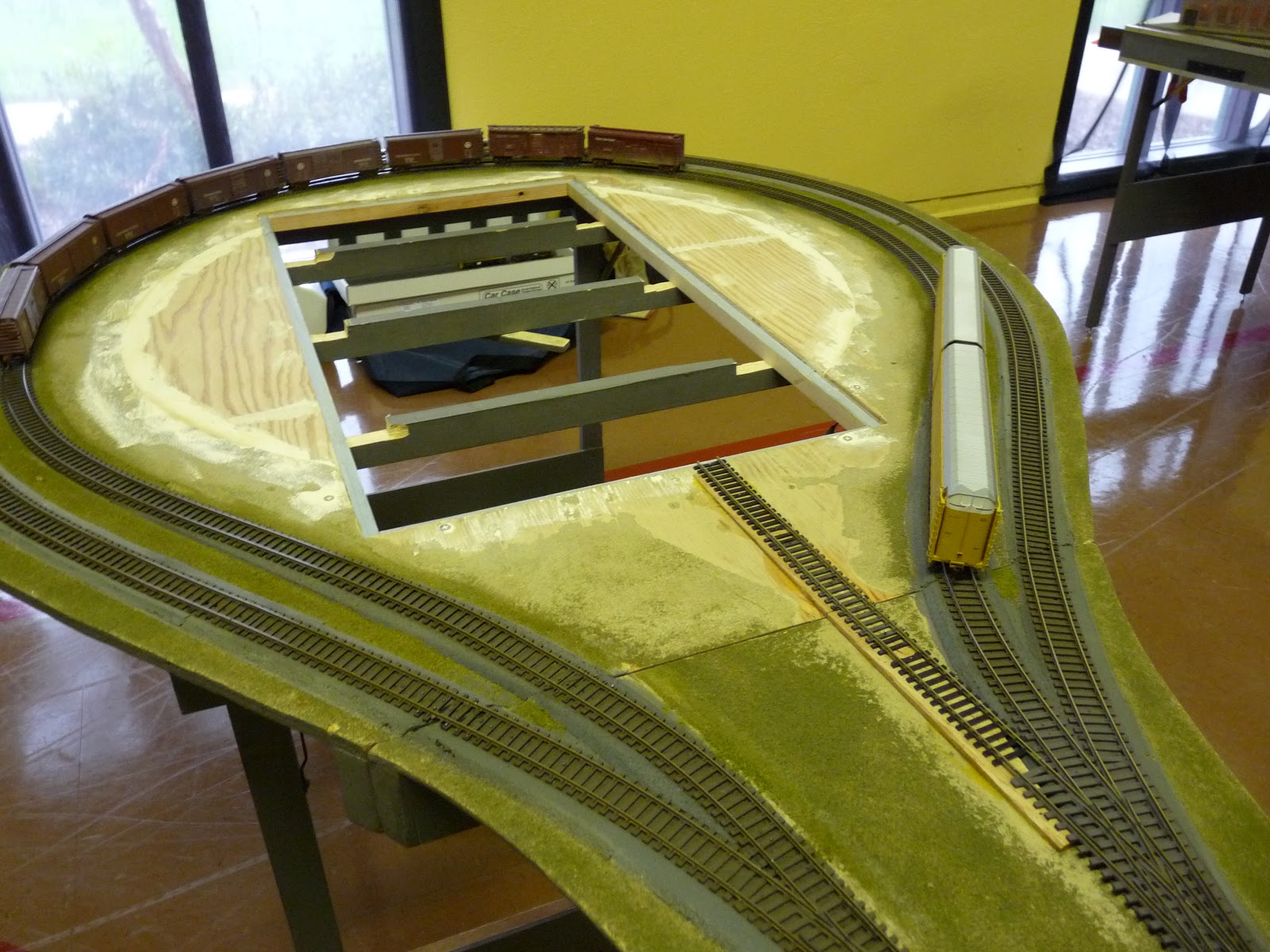
The modular club I belong to (Sacramento Modular Railroaders) is developing a new module type. We're calling these new modules 'drop-ins'.  The club owns two turn loops that have had open centers since they were built several years ago. The idea of the drop-ins is to fill those holes and also to provide the opportunity to construct mini modules that provide additional switching possibilities for our ops sessions.

They will be smallish at 18" wide by 32" long - with a single track centered on line 7" from one edge.

I'm a big fan of this new module type. Their small size means it can fit in the trunk of my car and I can quickly jump to the thing I like most about model railroading - building buildings.  I'm  scratch-building a freight house for my drop-in and it is based closely on the WP freight house that used to be at 3rd and R streets. I've written about this freight house and it's sister at 2nd and R quite a while ago here.

Since that early blog post I've asked and been given permission from Bob Clark to display some of his great pictures he took back in the 1970s of the building. You should be able to double click on the pictures to enlargeify them.

3rd street - West elevation 

freight office north elevation - the truck side
freight office south elevation

further down the south elevation - 

4th street - east elevation. That's the logo of a freight forwarder.

If I did the building in it's entirety, it would measure out to something like 42".  I was not a math major, but I believe that is more inches than I have drop in module length.  So I'm condensing the building - and I'm doing that by only modeling three railroad loading doors instead of the prototype's five. It should still look like a worthy freight house though, and I should be able to just fit it in at just under 32".

So I began cutting plastic and modifying window castings. Here are the first two walls I've been working on.  Wish me luck and the strength to persevere!   
west elevation office wall

north elevation office wall


Wednesday, July 4, 2012

"Stop All Trains at Caliente"


(My email account was briefly high-jacked a couple of weeks ago and an errant posting to this blog was one of the unhappy byproducts. My apologies to my readers. )

My fascination with the railroad history of the R Street corridor tends to concentrate my attention on the micro level, a part of a single switching district (albeit one with two class one railroads in it). Every once in a while it’s good to look at a somewhat larger picture. Something of a regional scale would be nice… Something that takes me from the world of the switch list to the world of timetable and train order (TT&TO)…

Model railroad operations embracing TT&TO rules need a large layout, preferably with a terminal on each end and some decent room to run in between. It needs enough willing and knowledgeable operators, dispatchers and train crews to make it believable. But if there is a group that is willing to do the work needed to setup and crew such an operation, and they have a layout large enough and configured correctly, then there is no better simulation on earth that can better replicate the teamwork and strategic thinking that was needed to move trains across the country in the era before radios and GPS.

On the weekend of June 9-10 2012, I was given the opportunity to take part in such a simulation. It was a two-day operations session at the La Mesa Club in the San Diego Model Railroad Museum.
Earthquake damage near Bealville.
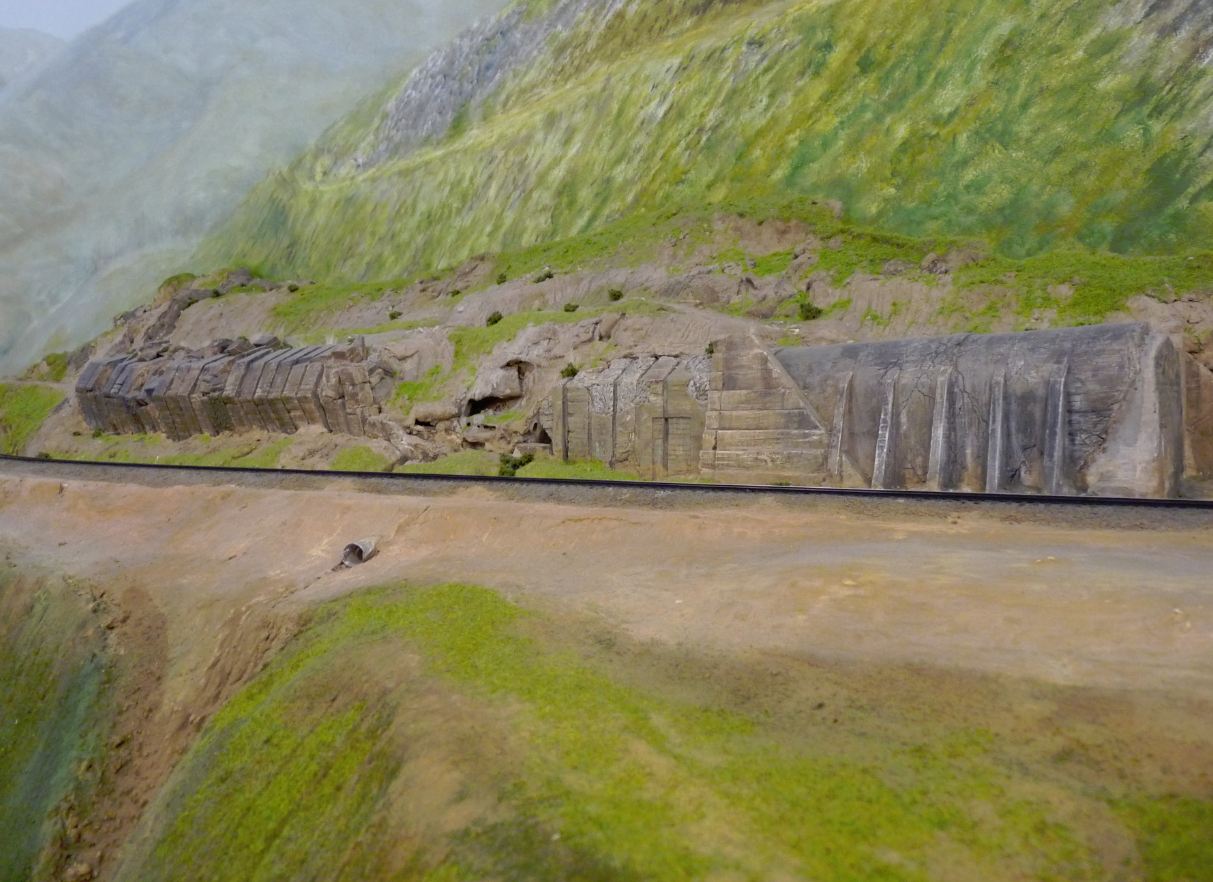
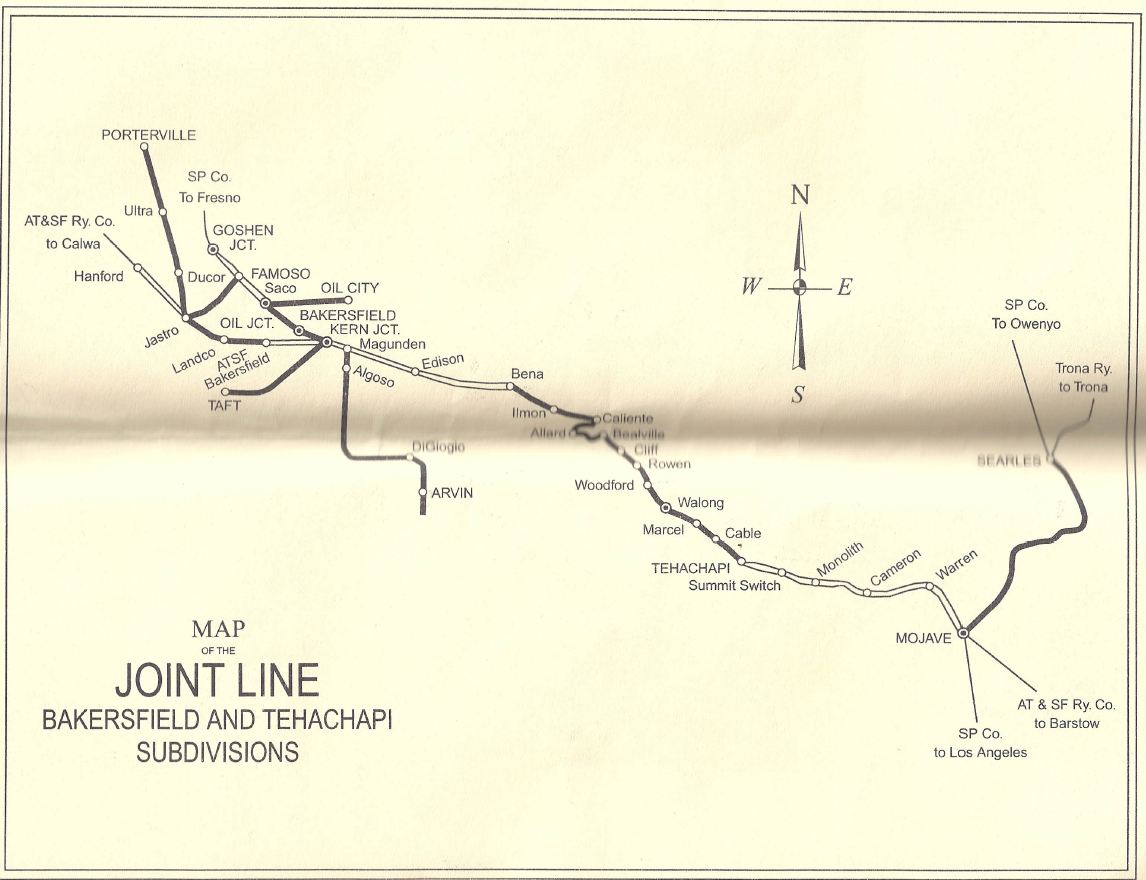
The La Mesa club is famous for reproducing in HO scale the territory between Mojave and Bakersfield including the dramatic Tehachapi Loop. La Mesa's layout is set in 1952, and the club is meticulous about that date. For instance, there was a 7.1 magnitude earthquake in July of 1952, and the La Mesa club has faithfully modeled some of the earthquake damage to one of the tunnels between Cliff and Bealville.

Every quarter or so, the club hosts a weekend TT&TO ops session. It can only be described as ‘hardcore”. They run trains from 8 am to 8pm on Saturday and Sunday. The two twelve-hour sessions represent a full 24 hour day in 1952. Not the same day over and over; time keeps advancing. I don’t know how many sessions they’ve done, but I believe they started their world sometime in November of 1952, and when we finished for the weekend when I was there, it was December 4th, 1952.

They keep track of everything. At the end of the session, the location of each train is recorded and then re-staged at that location at the start of the next session, three months later, to finish its run.
The setup obviously requires a tremendous amount of effort and organization, which includes not only the trains but the paperwork as well. Any orders left outstanding are retained and given to the new crew who will pick up the action next time around. My friend, Robert from San Jose (who ‘scored’ me the invitation and was my roommate for the weekend) and I saw a bit of this effort on Friday night after we got into town. Getting an advanced peek allowed us to get a little more familiar with the layout and its maze of duck-unders and hidden track work.

The map from the La Mesa Timetable.
My experience with TT&TO operations is limited, and certainly nothing could prepare me for operations on this scale. Fortunately they sent a ‘pilot’ with me on my first two jobs who was very knowledgeable and walked me through the thought process a train crew has to go through to figure out whether it’s safe to venture out on the railroad (and how far). Our first job was a westward extra SP freight train that was at Woodford at the end of the previous session. We were given the clearance form (can’t go on the main without it) and the two original orders, numbers 58 and 60. As an extra we didn’t have rights over any scheduled train in the timetable, but the orders gave us some meets with some of the later sections of second class train 806.

Order number 58 gave us our mission and gave us some meets with those 806 sections I mentioned and an eastward extra:
ENG 6386 RUN EXTRA MOJAVE TO KERN JCT AND MEET FOURTH 806 ENG ATSF 3900 AT WOODFORD FIFTH 806 ENG ATSF 225L AT CLIFF EXTRA 3259 EAST AT CALIENTE AND HAS RIGHT OVER SIXTH 806 MOJAVE TO BENA
Bena is the end of single track on the layout when going westward and if you have rights over a train to Bena you don’t worry about them at all. Kern Jct. is essentially Bakersfield, the end of the line.
Order 60 was addressed to extra 3259 which amended our and another westward extra’s meet locations with him and allowed him to advance against us past Caliente:
EXTRA 3259 EAST MEET EXTRA 6245 WEST AT ALLARD INSTEAD OF CALIENTE AND MEET EXTRA 6386 WEST AT WOODFORD INSTEAD OF CALIENTE
When we picked up the train at Woodford, my friend Robert was playing the part of the Woodford operator and he handed us an additional order. Order 66:
THREE EXTRAS 6150 WEST 6386 WEST AND 4230 WEST HAVE RIGHT OVER NO 808 MOJAVE TO BENA.
This helped some. It was just after 8 pm ( a little after 8 am on Saturday morning in reality). Our extra had originally been called up around 6 pm. The two hour delay now put us on 808’s time. He was due to leave Bakersfield at 8 pm if he was on time (and we had to assume that unless given an order to the contrary), and we would have to calculate where we would have to duck in to a siding to let him past, but this order relieved us of that chore.

After a couple of runs with my pilot, I was running trains on my own and having to make these calculations by myself (sometimes with the help of passing TT&TO veterans… they were very kind to me down in San Diego).

At the end of the day on Saturday I had just finished up a long slog with a slow extra that had made it through the territory without incident. I was tired and looking forward to knocking off, but then there was word of an accident near Caliente. One of a second class freight train’s helper engines derailed somehow in one of the tunnels, actually hitting the abutment and ‘clothes-lined’ a string of eight PFE reefers off the track, four of which tumbled into the river at milepost 334.8.

Just part of the wreck.
This wasn’t staged; it was a real and spectacular derailment. Instead of just re-railing and continuing on, the folks running the session decided to try to “game it out”. They ruled that the crew of that helper locomotive was killed and the locomotive itself would need to be towed. The Caliente operator told me the dispatchers were consulting the rulebook (the La Mesa club has their own rule book based closely on the 1952 SP rulebook) on how to write up orders for this sort of thing. First they sent a simple but dramatic order to the Caliente operator:
HOLD ALL TRAINS AT CALIENTE

This was order no 17 (note the lower order number since we were into a new day and the order numbers start over at 1 with the new day). There was probably a similar order given to Bakersfield at some point, but I never saw it.

The plan was to send wreck trains from both ends of the layout and clear the line. I was offered to run the wreck train from Bakersfield, and even though I was pretty beat, I couldn't refuse.

I picked up my clearance at Kern Jct. with order number 18:
Another view of the wreck.
ENG 2850 WORKS EXTRA 655 AM UNTIL 900 AM BETWEEN BENA AND M.P. 334.8 NOT PROTECTING AGAINST EASTWARD TRAINS
I wouldn’t have to worry about trains coming up behind me during that time window.

My work train at the wreck location.
Both wreck trains had to rearrange their trains to get the cranes on the respective points. I did my reshuffling at Ilmon. When we both arrived we simulated clearing the line and then the recovery of each reefer. When the cranes were positioned on either side of a wrecked reefer we could 0-5-0 it back to the track. The other work train pulled each reefer back to Caliente separately which was the only way to keep the crane on the point. In reality, most of the reefers would not have been anywhere close to road worthy after that tumble, some probably smashed to bits (fresh, but rapidly wilting, produce as far as the eye could see…). Regardless, it was a fun, long exercise. Just about everybody had a camera out. 
Work Trains at Caliente

After we cleared the line, both work trains reported to Caliente and that ended the Saturday session. Saturdays session was actually about 14 hours. We went a little long because of the ‘incident’. So about 10 PM on Saturday, the crew settled down for a well deserved pizza feeding frenzy there in the museum. I felt like I had earned overtime pay!  

On Sunday we picked up the action with both work trains taking the ‘damaged’ reefers from Caliente and the ‘damaged’ helper locomotive that was left set out at Ilmon to Bakersfield so the repair crews could get to work on the equipment. After that, the run session could continue normally.

I was able to run many trains over the course of the weekend from hotshot passenger trains to lowly extra freights. I made more than a few mistakes, but I learned a lot while committing them. At various times, I was offered yard assignments and a switching job- all of which I turned down. I’ll more than likely accept next time, but I was simply enjoying myself too much on the hill.

Saturday, January 28, 2012

The Arch and the Power Poles

The Arch - at 10th and R.
One of the new obelisks on R.
R Street redevelopment continues with some recent streetscape improvements. On the 19th of January, the first phase of these improvements were officially celebrated with the lighting of the new arch. FUEL Creative Group, designers of the street arch, a smaller pedestrian arch and stand alone obelisks, drew on the industrial history of the street for inspiration. When they scouted present day R Street, they found a couple of aged metal power poles and used them as a design element.

The poles, one at 8th street and another at 21st street, have long intrigued me. They are of a latticed metal construction and certainly have an industrial flavor to them.

In my photo collection of R Street, they pop up in the background in various places. The earliest photos I have date from the mid 1930s, and they were present back then. Even in those early photos, the pole line they are a part of is mostly made up of a wooden poles. But it is evident that there were more metal poles in the past than the two survivors we have today. Interestingly, nowhere in the photos I've studied is there evidence of them further west than 8th street. And this leads me to a theory.

I speculate that the poles date back to 1908 when the Great Western Power Company built a pole line from Brighton to a power house at 8th and R Streets.


The pole at 21st and R as it looks in 2012.
It's only about 2/3rds its original height. 
That's the old Bekins Building in the background   
Around 1908, Great Western built a power house at 8th and R Streets in its bid to compete with PG&E in Sacramento - especially for industrial customers as could be found along R Street. Great Western had a big hydroelectric plant at Big Bend on the Feather River that was the largest hydroelectric operation west of the Mississippi at the time*. The company transmitted 60,000 volts** on a high tension line from Big Bend to a substation at Brighton (Folsom and Power Inn Rd) on its way to Oakland. At Brighton a smaller feeder line came into Sacramento to the power house at 8th and R Streets. According to a historical survey sheet prepared by the State of California Department of Parks and Recreation, the 'building received 22,000 volts from Brighton and transformed it to 2300 volts for urban use'.
The power house at 8th and R from a 1912 issue of Electrical World.

Great Western Power was acquired by PG&E circa 1930 and the publicly owned Sacramento Municipal Utility District (SMUD) took over the electrical grid after a long and contentious fight on the evening of the last day of 1946. The building was in use up to at least the early 1980s but has since been torn down.

I'm reasonably certain the metal power poles were headed to the power house and their job was to transmit power from Brighton - I just would like to find some documentation that they date all the way back to 1908 or at least back to the Great Western days.

I do plan on modeling at least one of these poles for one of the modules or the home layout at some point. If done well they would make a striking model.

I'm glad FUEL Creative based part of their design on these old poles. They are very likely artifacts that have been a part of the long and interesting history of electricity in Sacramento.


* photo caption next to page 199 in PG&E the Centennial History of the Pacific Gas and Electric
 **  ibid p. 223 upgraded to 100,000 volts in 1909,